Stonewall Pride (50th anniversary)
4/22/2020
for soprano (amplified) and orchestra
Dracula is a 20-minute setting of Alfred Corn's poem, "My Neighbor, the Distinguished Count" It is written for a soprano-narrator and thirteen players: flute (doubling on piccolo), clarinet (doubling on bass-clarinet), trumpet, horn, percussion (two players), theremin, piano (doubling on celesta) and a quintet of strings.
The text retells the famous gothic tale from the point of view of a woman living next-door to "the distinguished count" In five scenes, the poem chronicles her initial disinterest, gradual seduction, then degradation, rejection and, finally, "vampiristic" transformation.
The piece makes enormous demands upon the soprano soloist, who must speak even more than she sings and, when singing, must negotiate over three octaves — from the D below middle-C (when conjuring up the voice of the count) to the E-flat above high-C (when depicting the woman in extremis).
The instrumental ensemble is perhaps most notable for the inclusion of the theremin — the exotic, other-worldly-sounding electronic instrument that evoked "horror" and "mystery" in early Hollywood films. Most of the poem is written in the past tense " the woman is telling us what happened. When the narrative reaches the present and Dracula himself comes to her "for the last time," the theremin " with its whooshes and wails " announces itself, personifying the (excitingly) depraved count.
Singing, in Dracula, is reserved for special occasions, such as when the count himself speaks or when the woman is most overwrought. As well, at key moments throughout the setting, I repeat, like an incantation, certain texts of the menacing count ("I come to you, dearest, because you think / Of me. An irresistible summons") and of the ecstatic woman (How often I long to stay profoundly asleep / And never be conscious again.").
Midway through the musical discourse, there is a fugue (the count's "troop of haggard followers ... congregate") and a final aria of transformation wherein the soprano's high-flying voice and the wail of the theremin merge as one....
The piece touches many emotional levels. With the use of the theremin, copious amounts of wind-machine and roiling bass drum, "scary" is a primary reaction —; as is "funny." Nervous giggles and startled gasps would not be unwelcome here. Deeper down, the listener confronts the more ominous world of addiction, betrayal and obsession. And inevitably, there comes the ultimate degradation " a faustian bargain with a devilish price: devolution into the living dead.
Dahl and Del Tredici stole the first-half honors in Dracula. Here, Dahl was the victim of the old blood-sucker, surrendering to his psycho-force over a tonal, richly detailed score recalling Richard Strauss in its generous pile.
Those who have performed the music of David Del Tredici know that it holds great appeal with audiences and musicians alike and recognize him as one of the most memorable voices of the twentieth century. A Pulitzer Prize winning composer, Del Tredici has received high praise for his large-scale serious musical works including Child Alice, An Alice Symphony and Final Alice.
Del Tredici is now entering a new phase in his compositions, moving away from his fascination with Alice in Wonderland. Though this new sonic landscape is still wild and creative, the texts he now uses for his vocal music are drawn from various sources. Dracula, a work for soprano and ensemble, was commissioned and premiered by the Eos Orchestra, with Jonathan Sheffer as conductor and Wendy Hill as soprano in March of 1999. Subsequent performances include the Aspen Music Festival, the Cleveland Chamber Symphony, with the Canadian premiere forthcoming in early 2000 at the Winnipeg New Music Festival.
The text arises out of My Neighbor, the Distinguished Count, a poem by Alfred Corn. The story depicts the vampire Count Dracula as an unassuming entity, borrowing blood from his neighbor, the narrator, as one would borrow a cup or two of sugar. An insidious tale of suburban seduction unfolds.
It's hard to realize that David Del Tredici turned 70 last year, A perennial "bad boy" of new music, he's retained his edge, playfulness, and subversive combination of decadence and innocence.
These two discs make a fitting, if belated, birthday present.
The big news is the return of Final Alice (1976) to the discography. Del Tredici named it that because it sets the conclusion of Alice in Wonderland (at the time it also seemed it would be the last in his series of settings of that book, but he‘s returned to it numerous times since). Final Alice is really unlike anything before it, though it has sure roots. The most important is the revival of a lost tradition, that of melodrama, the art of a sung theater piece in a concert setting. As a one-woman bravura show, it asks the singer to take on all the roles of the characters and be narrator; to both speak dramatically and sing at fever pitch for almost an hour, non-stop; and to switch styles on a dime, from music hall to slapstick to grand opera. By the end the chaos is so overwhelming she has to whip out a bullhorn to compete.
Del Tredici had already gained notoriety as a trained serialist who threw it all away to embrace a lush, indulgent neo-Romantic language, and many have never forgiven him. But in retrospect it was absolutely the right move. For one thing, it was him, the music took on enormous honesty. And along with George Rochberg and William Bolcom, he helped to invent American musical postmodernism, which has never been as ironic and academic as its counterpart in the visual arts. Subversive always, but all three of these composers have never abandoned their hearts in order to write this music that reshuffles all the sources and questions our relation to them.
Final Alice I think is a masterpiece. I still get chills at the end, when the poignant "Acrostic Song" (very Elgaresque) unspools, with the orchestra chanting the first letter of each line, which spells out the name Alice Liddell. I now hear it as an authoritative tribute and send-up to Ronsenkavalier, and I keep discovering things I didn't notice at first (like the oboe tuning A that starts the piece, and is the last note/sound in the entire work). While some have criticized the piece as being reactionary, in fact nothing could be farther from the point. It is music that could have only been written at its historical moment. Its sheer craziness, chaotic theatricality, and love/death embrace of tonality is part and parcel of America in the l980s. And it's perhaps the definitive approach to the sweetness and terror of the original text.
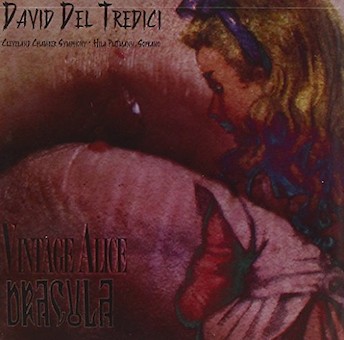
The Innova disc presents a pair of chronological bookends to Final Alice. Vintage Alice dates from 1972, and sets the famous Mad Hatter's Tea Party scene (the title has nothing to do with Carroll, coming instead from the Paul Masson Winery‘s commission). Obsessively focused on the tunes Twinkle, twinkle little star and God Save the Queen, it uses even more experimental techniques than Final Alice in particular, polytonality and poly-tempos. As in Final Alice, there's a folk group, and the singer narrates, takes all the roles, and moves into extremes of repetition and register. In a sense, it feels like a dress rehearsal for its longer, more ambitious descendent.
Dracula is from 1999, and sets a prose poem by Alfred Corn, "My Neighbor the Count," which relates a tale of progressive seduction, debasement, and enslavement of the narrator by the eponymous vampire, all from her victim's viewpoint. It has a brilliant, day-glow orchestration, cinematic in its high definition and bright colors. It uses the theremin near its conclusion as an aural symbol of the union between victim and oppressor. The piece is both funny and scary. Del Tredici treads a very narrow path here between camp and compassion, and for my money he pulls it off. Only the very ending feels a little unfulfilling after the long buildup, but it doesn't fatally undercut the overall impact of the whole work.
Soprano Hila Plitmann is a knockout in both pieces. She's a worthy successor to Hendricks. She has the sort of fluency of so many great young American singers nowadays, which allows her to switch effortlessly from speech to naturalist theatrical singing, to full operatic aria, to more experimental extended techniques. Her acting skills are extensive and often hilarious, as she deftly impersonatcs the Mad Hatter, the Dormouse, and Count Dracula. There was a wonderful recording on the DG "20/21" series of Vintage Alice with Lucy Shelton, Oliver Knussen, and the ASKO Ensemble, but it's already out of print, so lnnova's is now the work's sole representative, and does have the advantage of the composer as conductor.
The Decca release of Final Alice is a reissue of the original LP, and it's hard to imagine this performance will ever be bettered. Hendricks is spectacular, and the CSO never sounded more sonically Technicolor. Del Tredici shows that over three decades he's been able to keep his edge, and even though the music may have moved towards a slightly more Hollywood sound and presentation, it's still anything but comfortable, I have a feeling his is a body of work, which despite possessing an in-your-face quality for decades, is only now starting to come into clear focus. It simply cannot be categorized, yet fits seamlessly into a tradition – though which tradition may be up to you the listener to decide. But these are both a joy to behold, and Final Alice is now a strong contender for my Want List.
It's hard to realize that David Del Tredici turned 70 last year, A perennial "bad boy" of new music, he's retained his edge, playfulness, and subversive combination of decadence and innocence.
These two discs make a fitting, if belated, birthday present.
The big news is the return of Final Alice (1976) to the discography. Del Tredici named it that because it sets the conclusion of Alice in Wonderland (at the time it also seemed it would be the last in his series of settings of that book, but he‘s returned to it numerous times since). Final Alice is really unlike anything before it, though it has sure roots. The most important is the revival of a lost tradition, that of melodrama, the art of a sung theater piece in a concert setting. As a one-woman bravura show, it asks the singer to take on all the roles of the characters and be narrator; to both speak dramatically and sing at fever pitch for almost an hour, non-stop; and to switch styles on a dime, from music hall to slapstick to grand opera. By the end the chaos is so overwhelming she has to whip out a bullhorn to compete.
Del Tredici had already gained notoriety as a trained serialist who threw it all away to embrace a lush, indulgent neo-Romantic language, and many have never forgiven him. But in retrospect it was absolutely the right move. For one thing, it was him, the music took on enormous honesty. And along with George Rochberg and William Bolcom, he helped to invent American musical postmodernism, which has never been as ironic and academic as its counterpart in the visual arts. Subversive always, but all three of these composers have never abandoned their hearts in order to write this music that reshuffles all the sources and questions our relation to them.
Final Alice I think is a masterpiece. I still get chills at the end, when the poignant "Acrostic Song" (very Elgaresque) unspools, with the orchestra chanting the first letter of each line, which spells out the name Alice Liddell. I now hear it as an authoritative tribute and send-up to Ronsenkavalier, and I keep discovering things I didn't notice at first (like the oboe tuning A that starts the piece, and is the last note/sound in the entire work). While some have criticized the piece as being reactionary, in fact nothing could be farther from the point. It is music that could have only been written at its historical moment. Its sheer craziness, chaotic theatricality, and love/death embrace of tonality is part and parcel of America in the 1980s. And it's perhaps the definitive approach to the sweetness and terror of the original text.
The Innova disc presents a pair of chronological bookends to Final Alice. Vintage Alice dates from 1972, and sets the famous Mad Hatter's Tea Party scene (the title has nothing to do with Carroll, coming instead from the Paul Masson Winery‘s commission). Obsessively focused on the tunes Twinkle, twinkle little star and God Save the Queen, it uses even more experimental techniques than Final Alice in particular, polytonality and poly-tempos. As in Final Alice, there's a folk group, and the singer narrates, takes all the roles, and moves into extremes of repetition and register. In a sense, it feels like a dress rehearsal for its longer, more ambitious descendent.
Dracula is from 1999, and sets a prose poem by Alfred Corn, "My Neighbor the Count," which relates a tale of progressive seduction, debasement, and enslavement of the narrator by the eponymous vampire, all from her victim's viewpoint. It has a brilliant, day-glow orchestration, cinematic in its high definition and bright colors. It uses the theremin near its conclusion as an aural symbol of the union between victim and oppressor. The piece is both funny and scary. Del Tredici treads a very narrow path here between camp and compassion, and for my money he pulls it off. Only the very ending feels a little unfulfilling after the long buildup, but it doesn't fatally undercut the overall impact of the whole work.
Soprano Hila Plitmann is a knockout in both pieces. She's a worthy successor to Hendricks. She has the sort of fluency of so many great young American singers nowadays, which allows her to switch effortlessly from speech to naturalist theatrical singing, to full operatic aria, to more experimental extended techniques. Her acting skills are extensive and often hilarious, as she deftly impersonatcs the Mad Hatter, the Dormouse, and Count Dracula. There was a wonderful recording on the DG "20/21" series of Vintage Alice with Lucy Shelton, Oliver Knussen, and the ASKO Ensemble, but it's already out of print, so lnnova's is now the work's sole representative, and does have the advantage of the composer as conductor.
The Decca release of Final Alice is a reissue of the original LP, and it's hard to imagine this performance will ever be bettered. Hendricks is spectacular, and the CSO never sounded more sonically Technicolor. Del Tredici shows that over three decades he's been able to keep his edge, and even though the music may have moved towards a slightly more Hollywood sound and presentation, it's still anything but comfortable, I have a feeling his is a body of work, which despite possessing an in-your-face quality for decades, is only now starting to come into clear focus. It simply cannot be categorized, yet fits seamlessly into a tradition – though which tradition may be up to you the listener to decide. But these are both a joy to behold, and Final Alice is now a strong contender for my Want List.

4/22/2020